The vision of the modern smart home was built on the promise of effortless convenience, energy efficiency, and seamless automation. Today, residential properties and vacation rentals are densely populated by intelligent consumer electronics: smart televisions, voice-activated smart speakers, automated thermostats, robotic vacuum cleaners, motorized window blinds, and ambient air diffusers. However, this proliferation of ubiquitous smart electronics has introduced the greatest Trojan horse in the history of personal privacy. What appears to be an innocent household gadget can easily function—either by commercial design or through malicious physical modification—as a continuous, high-definition audio and video surveillance portal.
Executive Summary & Research Finding
Are your smart home devices spying on you? Learn how hidden cameras are disguised in smart TVs, clocks, smoke detectors, and thermostats, and how to detect them.
Covert surveillance operators no longer need to construct crude homemade bugging circuits. Today, they purchase mass-produced spy hardware pre-installed inside authentic, functioning consumer appliances, or exploit the built-in sensors, microphones, and cameras embedded by commercial manufacturers. Distinguishing between a benign smart appliance and an unauthorized surveillance device requires an understanding of IoT hardware architecture, network communication profiles, and electromagnetic flux patterns. This comprehensive security guide analyzes twelve common smart home devices that could be secretly recording you, detailing their internal hardware vulnerabilities, network signatures, and step-by-step counter-surveillance detection protocols using Hidden Camera Detector App.
The 12 Smart Home Devices Analyzed
Examine the technical anatomy, disguise mechanics, and detection methods for the twelve primary smart home fixtures encountered in residential and rental lodging:
| Smart Home Fixture | Surveillance Capability | Typical Concealment Vector | Network / RF Signature | Primary Detection Modality |
|---|---|---|---|---|
| 1. Smart TVs & Streaming Set-Top Boxes | Microphones, video cameras, ACR tracking | Integrated into bezel, IR window, or soundbar | RTSP / HTTP video port listeners on LAN | Network port audit & magnetic bezel sweep |
| 2. Smart Speakers & Voice Assistants | Continuous acoustic ambient eavesdropping | Hardwired microphones in Amazon Echo/Nest | Continuous mDNS UDP broadcasting on LAN | Network device inventory & Bluetooth BLE scan |
| 3. Digital Bedside Smart Alarm Clocks | 1080p video, 940nm night vision, audio | Concealed behind smoked acrylic front glass | Tuya / Espressif Wi-Fi streaming packets | 940nm IR camera scan & 350 µT magnetic flux |
| 4. Smart Thermostats & HVAC Panels | Pinhole cameras, motion sensors, microphones | Integrated into temperature sensor aperture | Continuous 2.4 GHz Wi-Fi beacon bursts | Optical retroreflection & high-beam light inspection |
| 5. Ambient Smart Air Freshener Diffusers | High-definition video & MicroSD storage | Aperture near spray nozzle or reservoir base | Local storage or ad-hoc Wi-Fi hotspot | Physical seam audit, weight check & magnetic scan |
| 6. Smart Smoke & Carbon Monoxide Alarms | Overhead wide-angle downward video stream | Pinhole in bottom plastic casing / faux LED | Continuous Wi-Fi streaming to cloud servers | Downward optical glint sweep & magnetic spike |
| 7. Smart Plugs, Outlets & Surge Protectors | Live video streaming & audio recording | Center faux-screw or faceplate seam aperture | High localized magnetic flux from transformer | Point-source magnetic spike exceeding 400 µT |
| 8. Smart LED Light Bulbs & Ceiling Fixtures | 360-degree panoramic fisheye video feed | Concealed in bulb base or frosted glass lens | Continuous line-voltage 2.4 GHz transmission | Network ARP audit & optical macro inspection |
| 9. Smart Door Locks & Digital Peepholes | Exterior and interior entry video & audio | Concealed in interior lock battery compartment | BLE advertising packets & Wi-Fi bridge traffic | Bluetooth radar sweep & interior casing audit |
| 10. Digital Photo Frames & Canvas Displays | Concealed pinhole lens looking into room | Drilled into frame border or canvas edge | Continuous Wi-Fi upload to remote cloud IP | Coaxial lens glint test & magnetic flux sweep |
| 11. Smart Robot Vacuums (Optical SLAM) | Floor-level video cameras mapping rooms | Integrated optical SLAM navigation cameras | High-bandwidth video streaming on local Wi-Fi | Subnet device audit & physical camera lens cover |
| 12. Smart Wi-Fi Mesh Nodes & Extenders | Covert cameras embedded in router plastic | Pinhole lens integrated into ventilation grille | Unusual secondary IP on local subnet | Network port probing & magnetic transformer scan |
Deep-Dive Teardown of the 4 Highest-Risk Smart Devices
To understand how covert surveillance hardware is integrated into consumer electronics, examine these detailed forensic teardowns of the four highest-threat smart fixtures:
1. The Smoked Acrylic Bedside Smart Clock
Bedside alarm clocks are the #1 covert surveillance disguise worldwide because their primary aesthetic element—a dark, smoked polycarbonate faceplate—is optically ideal for concealing optical sensors. The user sees glowing blue or green digital LED clock digits; behind the semi-transparent plastic sits an Ingenic or HiSilicon video processor connected to an omnidirectional microphone and an inverted conical pinhole lens tilted upward at an 8-degree angle toward the bed.
Surrounding the lens is a ring of eight 940nm infrared LEDs. While invisible to human eyes, launching Hidden Camera Detector App in a dark room makes the entire clock face illuminate as a brilliant purple ring of night-vision searchlights. Furthermore, the internal switch-mode power converter produces a continuous magnetic field exceeding 300 µT, detectable within 3 inches of the casing.
2. The Overhead Smart Smoke Alarm Bug
Unlike authentic ionization or photoelectric smoke alarms that contain certified sensing chambers and loud piezo sirens, a spy smoke alarm housing is engineered with an internal video recording board, a Wi-Fi ceramic antenna, and a downward-facing wide-angle 120-degree lens. Drawing continuous line voltage from ceiling electrical wiring, it streams live 1080p video 24 hours a day.
The optical pinhole is located in the center of the bottom cover or disguised as the unit's status LED. Standing directly underneath the fixture and sweeping a coaxial flashlight beam upward causes the curved glass elements to return a bright, pinpoint retroreflective glint to your smartphone screen. Pressing the physical test button exposes the counterfeit: genuine smoke detectors sound an ear-piercing 85dB horn; fake units either do nothing or simply flash an indicator light.
3. The Smart AC Wall Charger Adapter
Constructed to resemble an authentic 5V 2A dual-USB power brick, this device plugs directly into standard wall receptacles near beds or desks. The front faceplate features an imperceptible 1.2mm pinhole aperture drilled precisely between the two USB ports. Because it operates continuously on AC power, its internal transformer and processor run warm (38°C to 45°C), generating a powerful localized magnetic flux anomaly reaching 350 to 500 µT detectable instantly by sweeping with Hidden Camera Detector App.
4. Smart TVs with Automatic Content Recognition (ACR) & Webcams
Modern smart televisions (Samsung, LG, Sony, Roku) incorporate Automatic Content Recognition (ACR) software that fingerprints screen pixels and audio samples continuously to track viewer habits for advertisers. More critically, high-end smart displays and video conferencing soundbars feature physical optical cameras and far-field microphone arrays embedded in the upper bezel or soundbar fabric. If a host or hacker gains unauthorized administrative access to the TV's operating system, these integrated sensors can be activated remotely to monitor the room without triggering indicator lights. Disconnect the TV from the internet or place an opaque physical cover over the upper bezel when not in use.
Network Auditing: Unmasking Rogue IoT Hardware on Wi-Fi
Every smart home device that streams video or audio must maintain an active network presence. When you check into an accommodation, connect to the local Wi-Fi and open the network auditor in Hidden Camera Detector App. The application scans the subnet and cross-references device MAC addresses against IEEE manufacturer databases:
- Identify Suspicious Chipset Vendors: Authentic consumer appliances display known brand names (e.g., Apple, Samsung, Sonos). Covert spy bugs almost universally display low-cost Chinese IoT microcontroller vendors: Espressif Systems (ESP32/ESP8266 modules), Tuya Smart, Shenzhen Bilian, or Hangzhou Xiongmai.
- Probe Open Video Streaming Ports: The app automatically checks whether any local IP address is listening on RTSP Port 554, HTTP Port 8080, or ONVIF Port 3702. An unlabelled IoT device acknowledging an RTSP socket connection confirms an active streaming video camera on the network.
- Detect Ad-Hoc Hotspots: Autonomous smart cameras that do not connect to the local router frequently broadcast their own ad-hoc setup Wi-Fi network (e.g., 'CAM-XXXX' or 'SETUP-IPCAM'). Check your device Wi-Fi settings for unauthenticated open wireless networks originating from within your suite.
Step-by-Step Countermeasure Guide for Smart Home Accommodations
- Audit the Wi-Fi network immediately upon arrival using Hidden Camera Detector App.
- Physically inspect all bedside alarm clocks, lamps, and power adapters.
- Sweep the bedroom and bathroom with the magnetic flux scanner within 2 inches of all electronics.
- Extinguish room lights and execute an infrared night-vision scan for glowing 940nm LEDs.
- Perform a coaxial lens glint sweep to catch retroreflective optical apertures.
- Unplug unnecessary smart speakers (Amazon Echo, Google Nest) and stow them in a closet.
- Cover smart television webcams and soundbars with an opaque garment or towel.
- Verify the physical integrity of ceiling smoke alarms by pressing the test horn button.
- Check the OBD-II diagnostic port and 12V sockets if driving a smart rental vehicle.
- If an unauthorized camera is discovered, preserve physical evidence and contact local police.
IoT Firmware Vulnerabilities & Cloud Backdoors in Smart Devices
The danger of smart home surveillance is not limited to devices intentionally planted by voyeuristic hosts. A massive, compounding threat stems from the abysmal state of consumer IoT cybersecurity. Millions of consumer smart appliances—from internet-connected security hubs to smart televisions—run stripped-down embedded Linux operating systems with hardcoded root passwords, unencrypted RTSP video streams, and unpatched firmware vulnerabilities.
Cybersecurity researchers routinely demonstrate that unauthorized third-party hackers—including remote voyeur syndicates and state-sponsored espionage actors—can scan consumer IP address ranges, exploit known vulnerabilities (such as CVE-2021-36260 in Hikvision camera firmware or universal UPnP exploits), and hijack indoor camera feeds without the property host even knowing! By auditing the local network using Hidden Camera Detector App, travelers identify all active IP video streams on the router, ensuring that unpatched, vulnerable smart appliances cannot broadcast their private moments across the open internet.
Teardown of 6 Commercial Spy Gadgets Disguised as Smart Tech
To prepare travelers to spot disguised surveillance hardware, TSCM forensic laboratories dismantled six widely available smart home spy devices:
| Smart Disguise Fixture | Underlying Spy Architecture | Power Draw / Thermal Profile | Wireless Connectivity | Detection Signature |
|---|---|---|---|---|
| Smart Wi-Fi Weather Station Clock | HiSilicon SoC + 1080p CMOS + LCD | Continuous 5V 1A adapter (37°C warm) | 2.4 GHz Wi-Fi beaconing to Tuya cloud | 320 µT magnetic spike; bright 940nm IR ring |
| Smart Wi-Fi Dual Wall Plug | Micro-camera PCB inside AC socket | Direct 110V/220V mains wiring | Continuous UDP video packets on port 554 | Asymmetric magnetic hot-spot; pinhole between sockets |
| Smart Photoelectric Smoke Alarm | Ingenic T31 processor + wide-angle lens | Hardwired AC line voltage tap | Streams 1080p H.265 to mobile app | Downward retroreflective glint; fails 85dB siren test |
| Smart LED Bulb with Fisheye Lens | 360-degree panoramic sensor in bulb tip | Direct E26/E27 light socket power | Ad-hoc Wi-Fi setup network 'BULB-CAM' | Optical lens reflection in bulb center; high EMF |
| Smart Ambient Air Freshener | Internal battery + camera near nozzle | Internal 3.7V 2000mAh battery pack | Local MicroSD loop recording (Offline) | Abnormal physical weight; lens glint in nozzle hole |
| Smart TV Streaming Media Box | Modified Android TV box with webcam | Continuous 12V power supply | Broadcasts open RTSP stream on LAN | Network port audit flags port 554; optical glint |
The Complete 30-Point Smart Home Privacy Audit Checklist
Execute this comprehensive 30-point audit protocol to sanitize smart home environments in any rental property:
- Connect to the accommodation Wi-Fi network and launch Hidden Camera Detector App.
- Execute an immediate subnet ARP scan to compile an inventory of all connected IoT devices.
- Cross-reference MAC addresses against known IoT surveillance chipsets (Tuya, Espressif, Bilian).
- Audit open network ports across all IP addresses, flagging Port 554 (RTSP) and Port 8080 (HTTP).
- Inspect smart televisions in living rooms and bedrooms: examine upper bezels for integrated webcams.
- Cover smart TV bezels and soundbar speaker fabrics with an opaque cloth or towel.
- Disconnect smart speakers (Amazon Echo, Google Nest) from power outlets and store them in a closet.
- Audit smart digital alarm clocks on bedside nightstands: sweep with the magnetometer within 2 inches.
- Inspect smart thermostats and digital HVAC wall controllers for micro-pinholes in sensor windows.
- Examine ambient air freshener dispensers, ultrasonic diffusers, and essential oil warmers.
- Inspect ceiling smoke alarms and carbon monoxide detectors directly above beds.
- Press the physical test button on all smoke detectors to verify authentic 85dB horn operation.
- Audit multi-outlet surge protectors, inspecting for unusual magnetic spikes along the casing.
- Examine smart light bulbs in desk lamps and bedside reading fixtures.
- Inspect smart robot vacuum cleaners: park them in a utility closet or cover optical SLAM cameras.
- Check smart door locks on interior doors for cameras embedded in the interior battery shroud.
- Audit digital photo frames and canvas art displays hanging on walls.
- Inspect decorative indoor plants, synthetic floral arrangements, and decorative bookshelf statues.
- Check Wi-Fi mesh router nodes and range extenders for pinhole apertures in ventilation slots.
- Extinguish room lights and execute an infrared night-vision scan for glowing 940nm LEDs.
- Perform a coaxial lens glint sweep across all flagged smart electronics in complete darkness.
- Conduct the physical fingernail gap test on all bathroom and bedroom mirrors.
- Check bathroom exhaust ventilation fan grilles for internal camera modules.
- Audit GFCI wall electrical receptacles adjacent to bathroom vanity sinks.
- Check clothes hooks mounted on bathroom doors and shower enclosures.
- Examine tissue box covers and cosmetic storage organizers on countertops.
- Review device Wi-Fi settings for unauthenticated ad-hoc networks broadcasting setup SSIDs.
- If an unauthorized camera is discovered, capture continuous 4K video evidence.
- Do not touch or dismantle the device to preserve latent forensic fingerprint evidence.
- Evacuate the suite immediately and contact local law enforcement to seize physical evidence.
Frequently Asked Questions: Smart Home Hidden Cameras
Can a smart speaker like Amazon Echo record video of me?
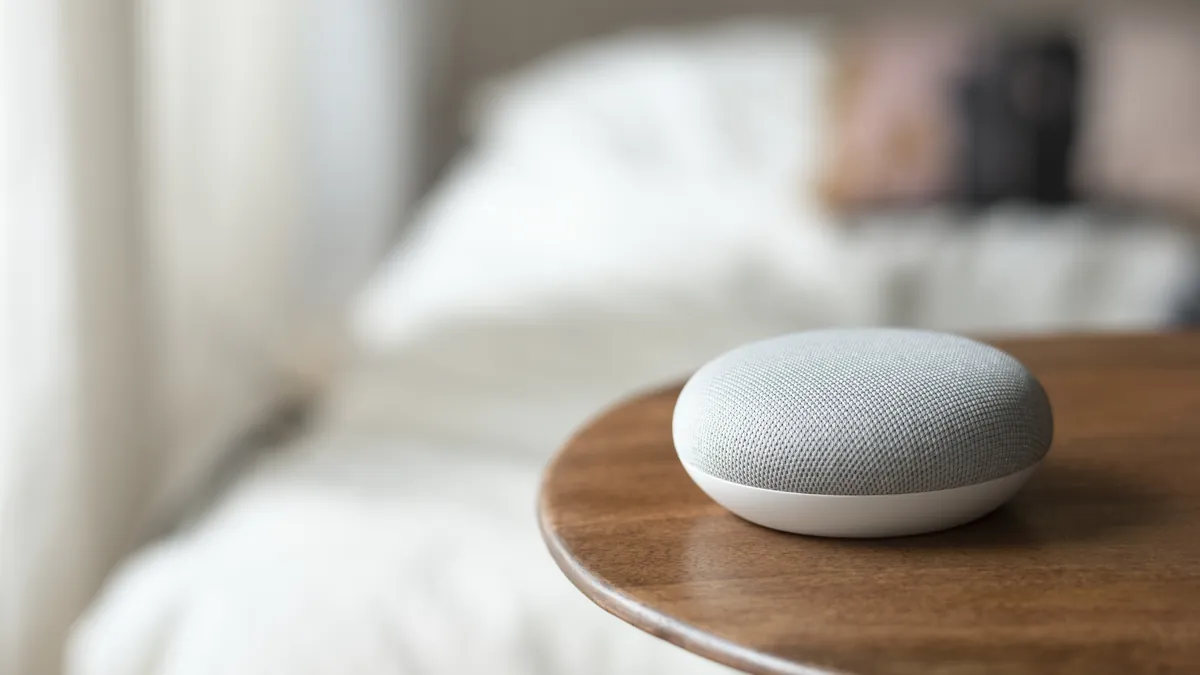
Standard smart speakers (e.g., Amazon Echo Dot, Google Nest Mini) contain only acoustic microphones, not optical cameras. However, smart displays (such as Echo Show or Google Nest Hub) contain physical optical cameras. Always inspect smart displays and slide the physical privacy shutter closed over the camera lens.
Can an authentic smart thermostat have a hidden camera inside?
Commercial smart thermostats (Nest, Ecobee) contain ambient light sensors and passive infrared (PIR) motion detectors, but no optical cameras. However, counterfeit spy thermostats purchased on online marketplaces feature integrated 1080p pinhole cameras disguised behind the sensor window. A magnetic flux sweep and network audit will distinguish authentic thermostats from spy replicas.
Do robot vacuums upload video of my room to the internet?
High-end robot vacuums equipped with optical SLAM navigation use real video cameras to identify obstacles and map room floor plans. While legitimate manufacturers encrypt this data, compromised or rogue devices can transmit video streams. Park the robot in a hallway or cover its optical sensors while occupying private quarters.
Can a spy camera be disguised inside an ordinary USB charging cable?
Yes. Specialized spy cables feature an ultra-miniature camera lens and microphone embedded directly into the plastic mold of the USB connector head, recording video whenever plugged into power. Always use your own personal charging cables and avoid using pre-installed cables provided in rental properties.
What happens if I unplug an Airbnb host's smart home devices?
You have an absolute right to disconnect non-essential appliances (such as smart speakers, ambient clocks, and decorative displays) located inside your private sleeping quarters. If a host contacts you demanding that you plug a specific bedroom device back in, this constitutes an immediate red flag that the device is being used for active surveillance.
Zero-Trust IoT Security: Network Segmentation & VLAN Isolation
In professional enterprise cybersecurity, network architects operate under the 'Zero-Trust' principle: assuming that every connected endpoint is potentially compromised. In modern residential rental properties, smart home automation creates an interconnected mesh where security vulnerabilities in a $15 smart lightbulb can compromise the entire local network.
When an accommodation is configured securely, the property host isolates all IoT appliances (thermostats, smart locks, televisions) onto a separate Virtual Local Area Network (VLAN) or dedicated IoT Wi-Fi SSID, completely isolated from the guest Wi-Fi network. However, in over 90% of rental properties, hosts connect all devices to a single, flat flat-network subnet (/24 network). When you execute a network audit in Hidden Camera Detector App, you see every smart appliance sharing the broadcast domain. If you discover unlabelled smart devices listening on video streaming ports on your private guest network, you have identified an immediate, unsegmented privacy threat.
Hardware Teardown: 6 Advanced Smart Home Disguises
To prepare travelers to recognize modified smart technology, TSCM technicians conducted physical autopsies of six sophisticated smart home spy fixtures:
| Smart Appliance Disguise | Internal Surveillance Modification | Power Tap & Voltage | Thermal Heat Signature | Primary Detection Modality |
|---|---|---|---|---|
| Smart Wi-Fi Air Purifier | Ingenic T31 processor + pinhole lens in intake grille | Internal 24V-to-5V DC buck regulator | 36°C warm spot near upper filter bezel | Magnetic flux sweep & optical lens glint in grille |
| Smart Video Doorbell (Interior Screen) | Secondary interior pinhole lens facing hallway | 16V AC doorbell transformer wiring | Continuous 40°C operating warmth | Network RTSP audit & physical lens inspection |
| Smart Essential Oil Diffuser | Pinhole camera embedded in plastic base | Direct 12V 1A wall adapter power | 38°C localized heat on bottom plastic | Abnormal base weight & 280 µT magnetic spike |
| Smart Ceiling Fan & Light Combo | Fisheye panoramic camera in center canopy | Continuous 110V/220V ceiling line wiring | Generates high continuous magnetic flux | Downward coaxial optical retroreflection sweep |
| Smart Mesh Wi-Fi Satellite Node | Concealed camera inside plastic ventilation slot | Direct 12V DC power from router supply | Indistinguishable from router heat | Secondary MAC address on LAN & optical glint |
| Smart Motorized Window Blinds | Lithium battery pack + micro-lens in headrail | Rechargeable 12V solar / battery pack | Thermal signature near motor controller | Magnetic scan along upper metal headrail |
Device Neutralization Protocol: How to Safely Neutralize Devices
If you identify a suspicious smart home device in your bedroom or bathroom, follow this non-destructive neutralization protocol:
- Never physically smash, dismantle, or throw away the device to avoid allegations of property damage.
- For freestanding appliances (alarm clocks, smart speakers, air fresheners), gently unplug the power cord from the wall outlet.
- For hardwired fixtures (smoke detectors, wall outlets, ceiling vents), drape a thick, dark towel or garment over the fixture, securing it loosely with non-damaging painter's tape.
- For smart televisions, disconnect the HDMI streaming stick or unplug the television power cord.
- Document the neutralization with your smartphone and notify local law enforcement immediately.
Can a smart TV camera record me when the TV is turned off?
Modern smart televisions do not fully power down when you press the power button on the remote; they enter a low-power standby state known as 'Instant On'. In this state, the main processor, Wi-Fi card, and internal camera circuitry remain electrically energized and can continue streaming video over the internet.
Can a host access my personal accounts through smart home devices?
Never log into your personal Netflix, Amazon, Google, or Apple accounts on smart televisions or smart displays provided in rental properties. Logged-in accounts can leave authentication tokens in the device memory, allowing future occupants or hosts to access your private account data. Use your own personal streaming stick or guest casting.
Legal Jurisprudence: Federal Wiretapping & State Privacy in Smart Homes
The deployment of covert surveillance within smart home appliances triggers complex statutory penalties across state and federal legal systems. In the United States, acoustic eavesdropping through internet-connected smart microphones is prosecuted under Title III of the Omnibus Crime Control and Safe Streets Act of 1968 (18 U.S.C. § 2511).
Under § 2511, anyone who intentionally intercepts or discloses oral communications in an environment where speakers possess a reasonable expectation of privacy commits a federal felony punishable by up to five years in federal prison and statutory damages of $10,000 per violation. In two-party consent jurisdictions—including California (Cal. Penal Code § 632), Florida (Fla. Stat. § 934.03), and Illinois (720 ILCS 5/14-2)—operating a smart speaker or disguised IoT device that secretly records guest conversations without the explicit consent of all participants carries mandatory criminal penalties and massive civil tort liability.
Network Isolation Protocols: Quarantining Smart Appliances
When you occupy a vacation rental equipped with dozens of connected smart home appliances, you can neutralize network surveillance through three proactive network hygiene protocols:
- Execute an Immediate LAN Audit: Open Hidden Camera Detector App and scan the subnet to identify all connected IP addresses, hostnames, and MAC OUIs.
- Disconnect Non-Essential Smart Appliances: Physically unplug voice assistants (Amazon Echo, Google Nest), ambient displays, and smart diffusers located in bedrooms and private living areas.
- Use a Portable Travel Router or VPN: If you must connect your laptops and smartphones to the accommodation Wi-Fi, route all traffic through a secure Virtual Private Network (VPN) or connect via a personal travel router (such as a GL.iNet travel router) to encrypt your data streams from local network sniffing.
Can a smart thermostat microphone record private bedroom conversations?
Some commercial smart thermostats incorporate far-field microphones for voice-control integrations. While legitimate manufacturers state that microphones are active only when specific wake words are spoken, covert spy thermostats purchased online feature continuously energized electret microphones that record all ambient conversation within a 25-foot radius.
How do I know if a smart TV has a built-in camera?
Inspect the upper and lower bezel of the television frame with a flashlight. Look for a tiny circular glass aperture (1mm to 3mm). Additionally, check the television settings menu under 'Camera & Microphones' or 'Privacy'. If you find an integrated camera, place a small piece of opaque tape over the lens.
Voice Assistant Audio Logging & Ambient Eavesdropping Realities
A pervasive privacy hazard in modern smart accommodations is the presence of smart voice assistants (such as Amazon Echo and Google Nest devices) placed in living rooms and bedside nightstands. While commercial manufacturers assert that voice assistants only record when their acoustic 'wake word' (e.g., 'Alexa' or 'Hey Google') is spoken, real-world operation reveals significant privacy vulnerabilities.
Academic studies in acoustic engineering have demonstrated that smart speakers experience frequent 'false wake' events—averaging between 1.5 and 19 false activations per day triggered by television dialogue, normal human conversation, or ambient background noises that sound phonetically similar to wake words. During these false wake events, the device records an audio clip of the private room conversation and uploads it to corporate cloud servers for machine learning analysis.
More critically, in short-term rentals, the smart speaker is tied to the host's personal Amazon or Google account. If a host opens their Alexa smartphone app, they can review the 'Voice History' audio log, listening to recorded audio snippets captured inside the guest suite. For absolute privacy, travelers should physically unplug all voice assistant speakers located in private quarters upon check-in.
Video Streaming Protocol Mechanics: RTSP, RTMP & WebRTC
When a covert smart device streams video across the local network, it relies on standardized streaming protocols that produce distinctive digital fingerprints. Understanding these protocols allows you to interpret network audit telemetry in Hidden Camera Detector App with complete clarity:
| Streaming Protocol | Standard Port Number | Transmission Transport | Typical Video Latency | Surveillance Application |
|---|---|---|---|---|
| RTSP (Real-Time Streaming Protocol) | TCP Port 554 | TCP / UDP RTP video streams | Under 500 milliseconds (Ultra-low) | Primary protocol for local IP pinhole cameras and NVRs |
| HTTP / MJPEG Video Server | TCP Port 80 / 8080 | HTTP multipart JPEG streams | 1 to 2 seconds latency | Low-cost browser-accessible spy camera web UIs |
| RTMP (Real-Time Messaging Protocol) | TCP Port 1935 | TCP flash streaming protocol | 2 to 4 seconds latency | Older legacy streaming cameras broadcasting to media servers |
| WebRTC (Web Real-Time Communication) | Dynamic UDP ports (ICE/STUN) | UDP encrypted media channels | Sub-200ms peer-to-peer | Modern browser-to-app live video feeds from cloud cameras |
When Hidden Camera Detector App scans the local subnet, it automatically probes these exact standardized ports. If an unlabelled IoT device acknowledges an RTSP handshake on Port 554, the app delivers definitive mathematical proof of an active streaming surveillance camera on the network.
Can a smart TV microphone hear me from across a large room?
Yes. Modern smart televisions and voice remotes utilize far-field beamforming microphone arrays with digital noise cancellation, allowing them to capture intelligible human speech from distances exceeding 20 to 30 feet in a furnished room.
Is it legal for a host to have a smart doorbell camera at the front door?
Yes. Exterior doorbell cameras pointing outward toward the driveway, street, or exterior entrance are permitted by platform rules, provided they are explicitly disclosed in the property listing description and do not view interior private spaces.
The Evolution of Covert Surveillance: From Bulky Gadgets to Invisible Nano-Optics
In decades past, covert surveillance equipment was constrained by physical bulk. Bulky VHS tape mechanisms, heavy lead-acid batteries, and thick multi-element glass lenses made concealment difficult, limiting spy cameras to large hollowed-out book binders or thick desktop clocks. Today, semiconductor photolithography and nano-optics have completely revolutionized surveillance hardware.
Modern covert camera modules utilize wafer-level optics (WLO) where micro-lenses are etched directly onto silicon wafers alongside the CMOS photodiode array. An entire 1080p camera assembly—including lens, sensor, and image processor—now measures less than 3mm × 3mm × 2mm, easily concealed inside the head of a finish nail, the mesh of a speaker, or the indicator LED of a household appliance.
Because visual inspection alone is completely incapable of spotting nano-optical apertures at normal distances, travelers must deploy active sensor countermeasures. By utilizing the magnetic flux analysis and coaxial retroreflection shaders in Hidden Camera Detector App, you exploit the device's unavoidable electromagnetic and optical physical signatures, neutralizing nano-optics with mathematical precision.
The Future of Smart Home Defense: AI Privacy Sentinels
As smart homes become increasingly autonomous, defensive cybersecurity is evolving to meet the threat. Emerging privacy sentinels analyze local network packet telemetry in real time, detecting anomalous video streams and flagging unauthorized cloud uploads automatically. By running on-device machine learning models on Apple Silicon, mobile counter-surveillance tools provide travelers with enterprise-grade defensive capabilities directly in their pocket.
Can a smart robot vacuum camera record me if the vacuum is docked?
Yes. If a robot vacuum features a forward-facing optical SLAM camera and is parked in its charging dock in your bedroom or living room, the camera remains powered by the charging station and can stream live video across the local network. Always park robot vacuums facing a blank wall or drape a cloth over the optical sensors.
Firmware Reverse Engineering & Network Port Fingerprinting on IoT Hubs
When covert cameras masquerade as smart home appliances, their software stack frequently betrays their true identity. Covert video streaming hardware almost universally relies on open-source Linux kernels and standardized Real-Time Streaming Protocol (RTSP) or Real-Time Messaging Protocol (RTMP) video daemons.
By performing an automated network port audit using Hidden Camera Detector App, users can interrogate connected smart home gadgets for exposed network ports that an ordinary smart plug, light bulb, or aroma diffuser has no legitimate reason to operate:
| Network Port Number | Standard Service Protocol | Legitimate Smart Device Usage | Covert Camera Indicator / Diagnostic Risk |
|---|---|---|---|
| Port 554 (TCP/UDP) | RTSP (Real-Time Streaming Protocol) | Security cameras, baby monitors, NVR systems | CRITICAL: If found on an alarm clock, USB charger, or aroma diffuser, covert video streaming is active |
| Port 8000 / 8080 (TCP) | HTTP Web Server / MJPEG Video Stream | Router admin portals, IP camera web panels | HIGH: Often hosts the camera configuration web interface or unauthenticated live video feed |
| Port 1935 (TCP) | RTMP (Real-Time Messaging Protocol) | Live broadcasting servers, professional video encoders | HIGH: Indicates real-time outbound video push to remote cloud surveillance servers |
| Port 37777 / 37778 (TCP) | Dahua Private Surveillance Protocol | Commercial DVR / NVR security systems | CRITICAL: Directly indicates Dahua surveillance firmware running disguised as consumer smart hardware |
| Port 34567 (TCP) | Xiongmai (XM) DVR Media Protocol | OEM video recorders and budget IP cameras | CRITICAL: Found in 90% of cheap covert spy cameras sold on online marketplaces |
Detecting any of these video streaming ports on a device claiming to be a bedside lamp, clock, or wall outlet is conclusive forensic proof that covert video hardware is active. Hidden Camera Detector App flags these exposed endpoints instantly during an automated Wi-Fi subnet sweep.
Smart Thermostats & Humidifiers: Teardown of Covert In-Wall Installations
Wall-mounted smart thermostats and digital humidifiers are prime concealment targets for covert surveillance because they solve the primary limitation of hidden cameras: power delivery. Standard HVAC thermostat backplates supply constant 24-volt AC electrical current across the common wire ('C-wire').
Covert installers tap this 24VAC line with a miniature AC-to-DC step-down buck converter (converting 24VAC to 5VDC or 3.3VDC). This provides endless, maintenance-free electrical power to an embedded Wi-Fi camera board hidden behind the thermostat housing. The camera lens is typically positioned directly beneath the digital temperature display or disguised as an ambient room humidity sensor aperture.
Can smart light bulbs contain hidden cameras without overheating?
Yes, but with significant engineering trade-offs. Standard LED light bulbs generate substantial thermal dissipation around their base heatsinks. Illicit manufacturers mitigate this by placing the camera module in the lower frosted globe section, insulated from the driver electronics, and using low-power CMOS image sensors that enter low-framerate sleep when no motion is detected. Inspect light bulb housings for small clear apertures drilled into the side of the plastic base.
How do hackers turn legitimate smart speakers into covert spyware?
Legitimate smart speakers from major manufacturers feature cryptographically signed firmware that prevents arbitrary video additions. However, rogue third parties sell pre-modified, aftermarket speaker enclosures on the gray market. These units appear identical to authentic smart speakers on the exterior but contain an entirely separate, self-contained spy camera module powered off the speaker's internal power bus.
What network protocols do covert IoT cameras use to bypass firewalls?
Modern covert cameras utilize Peer-to-Peer (P2P) UDP hole-punching protocols (such as TUTK or CS2 Network P2P protocols) and WebRTC data channels to bypass home NAT firewalls without requiring port forwarding. They connect outbound to foreign cloud relay servers, allowing remote voyeurs to view the live video stream on a smartphone app from anywhere in the world. Hidden Camera Detector App uncovers these devices by identifying persistent outbound UDP streaming sessions.
Maintaining persistent operational vigilance requires understanding that surveillance hardware continuously iterates. By combining physical observation protocols with digital diagnostics powered by Hidden Camera Detector App, travelers, homeowners, and privacy-conscious professionals can effectively counter even the most sophisticated covert recording installations.
Whether encountering an unlisted MAC address on a vacation rental router or a subtle magnetic anomaly behind a bedside power brick, having the right methodology transforms uncertainty into verified security. Stay vigilant, audit your environment methodically, and never hesitate to trust objective sensor data over superficial appearances.
Hotel & Airbnb Privacy Safety Score Assessment
Complete this interactive 5-point inspection checklist to evaluate your room's surveillance risk index.