
Modern public health faces two simultaneous epidemics: chronic sedentary behavior and compulsive digital media addiction. The average adult spends 4 hours and 18 minutes staring at mobile screens daily-almost entirely while slouched on chairs, couches, or beds. At the same time, fewer than 22% of adults hit the recommended benchmark of 8,000 to 10,000 daily steps, leading to elevated risks of metabolic syndrome, insulin resistance, and cardiovascular decline.
Executive Summary & Research Finding
Convert screen time to calories and hit 10,000 daily steps. Discover how Unloop gamifies physical pedometer steps into earned screen time minutes.
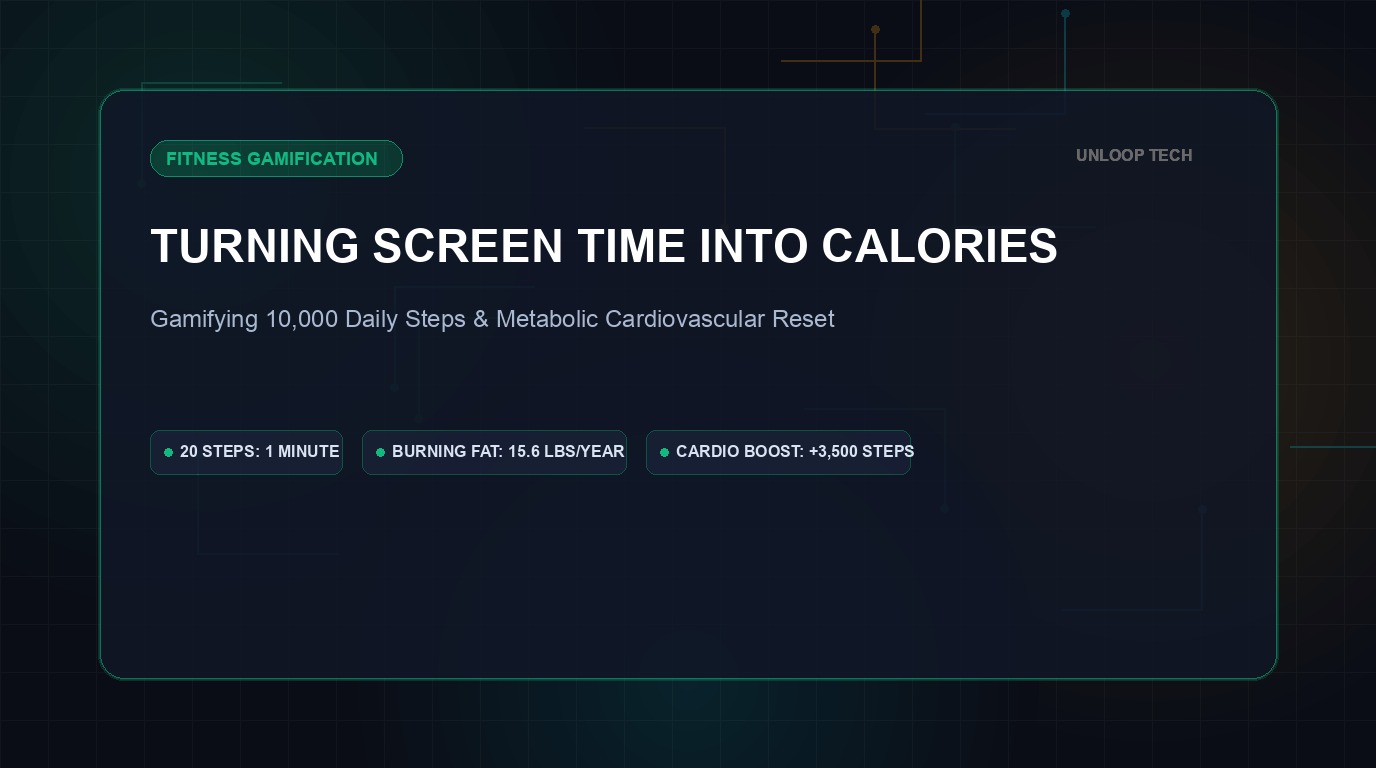
What if, instead of treating physical fitness and digital detox as separate chores, you linked them into a self-reinforcing gamified economy? By requiring 20 walking steps for every 1 minute of recreational screen time, you create an effortless bridge between your fitness and digital goals. In this fitness gamification guide, we explore how Unloop's Walk-to-Unlock Engine turns smartphone cravings into active calorie burn.
The Energy Equation: Sedentary Scrolling vs. Ambulatory Earning
Examine the physiological and metabolic difference between passive consumption and walk-to-unlock habits:
- Sedentary Scrolling: Burns ~65 calories per hour (basal metabolic rate). Suppresses lipoprotein lipase activity by up to 90%, impairing lipid clearance.
- Brisk Walking (100 steps/min): Burns ~280 to 340 calories per hour. Activates major muscle groups, enhances insulin sensitivity, and triggers neurogenesis (BDNF).
- The 4,000 Step Bonus: Earning 45 minutes of daily screen time generates 900 to 1,500 active steps per session, effortlessly pushing users past the 10,000 daily step milestone.
The Annual Caloric Dividend
Walking an extra 3,500 steps every day to earn your evening screen time burns approximately 150 additional calories daily. Over a full year, that equals 54,750 burned calories-the equivalent of roughly 15.6 pounds of body fat, achieved with zero restrictive dieting.
Daily Step & Calorie Burn Progression in Unloop
How step requirements translate into real metabolic and digital results:
| Target Screen Time | Required Steps (20 steps/min) | Walking Distance | Active Calories Burned | Health Impact |
|---|---|---|---|---|
| 15 Minutes | 300 Steps | ~0.15 miles | 15 kcal | Postural & cervical reset |
| 30 Minutes | 600 Steps | ~0.30 miles | 30 kcal | Blood glucose regulation |
| 60 Minutes | 1,200 Steps | ~0.60 miles | 60 kcal | Cardiovascular stimulation |
| 120 Minutes (Binge) | 2,400 Steps | ~1.20 miles | 120 kcal | Major fitness milestone |
How to Maximize Daily Activity with Unloop
- Set the Walk Rule for All Social Media: Connect Instagram, YouTube, and X to Unloop's Walk-to-Unlock pedometer rule.
- Earn During Work Phone Calls: Pace around your office or living room during meetings to bank steps for your evening entertainment.
- Take Outdoor Walking Breaks: When afternoon fatigue hits, lace up your sneakers and walk around the block to earn your evening podcast or video.
- Sync Seamlessly with Apple Health: Unloop reads pedometer data safely via CoreMotion without draining extra battery life.
Screen Time & Attention Dividend Calculator
Calculate how many conscious waking years you lose to algorithmic feeds and discover the compounded lifetime hours reclaimed with behavioral friction.
By reducing phone usage by 1.5 hours daily, you effectively gift yourself nearly 23 entire 24-hour days every single year to read literature, master new crafts, or be fully present with family.