For international travelers traversing the bustling metropolises, neon-lit nightlife districts, and serene tropical archipelagos of Asia, Agoda is the undisputed powerhouse booking engine. From ultra-futuristic capsule hotels in Tokyo's Shinjuku to high-rise serviced suites in Bangkok, historic ryokans in Kyoto, private pool villas in Bali, and ubiquitous budget motels across South Korea, Agoda offers unmatched access to Asian hospitality. Yet, behind the welcoming smiles and extraordinary cultural richness lies a deeply entrenched technological threat: East and Southeast Asia have repeatedly surfaced as global ground zero for covert digital voyeurism. Equipping your smartphone with Hidden Camera Detector App before embarking on an Asian itinerary has become an essential personal security prerequisite.
Executive Summary & Research Finding
Learn how to find hidden cameras in Agoda rentals, Asian hotels, and South Korean motels. Discover South Korea's Molka crisis, Bali villa sweeps, and safety tips.
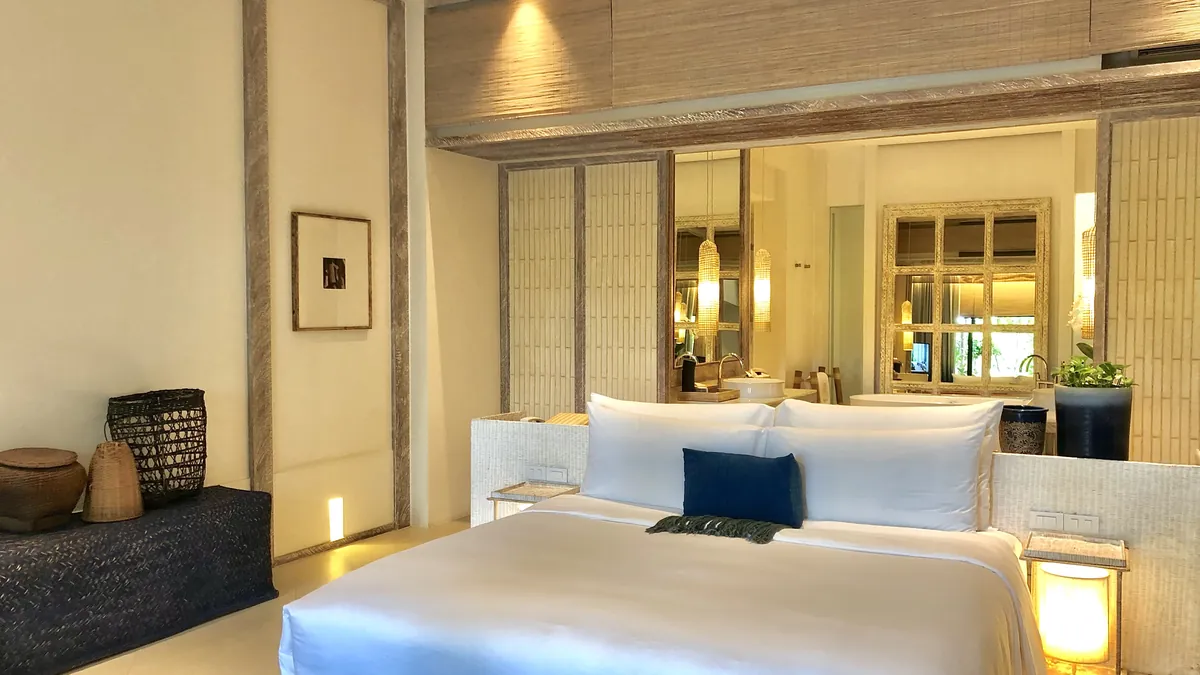
In South Korea, the epidemic of illicit micro-camera voyeurism has achieved nationwide notoriety, encapsulated by the cultural term 'Molka' (몰카). There, highly organized criminal syndicates have weaponized consumer electronics, planting wireless pinhole lenses inside everyday hotel furnishings and livestreaming intimate bedroom and bathroom video feeds to paying subscribers on dark-web servers. Meanwhile, across tropical leisure destinations like Bali, Phuket, and Koh Samui, the unique architectural open-air nature of luxury villas—featuring exposed bamboo beams, outdoor rainforest showers, and thatched alang-alang ceilings—presents effortless physical camouflage for bad actors seeking to deploy covert recording gear without guest detection.
This exhaustive investigation delivers the authoritative travel guide to hotel and villa privacy across Asia in 2026. We dissect the mechanical and criminal anatomy of South Korea's Molka crisis, analyze documented law enforcement takedowns across East and Southeast Asia, identify high-probability concealment vectors unique to Asian hospitality architecture, and provide a systematic physical, optical, and network sweep protocol designed to protect travelers across every destination.
The South Korean 'Molka' Crisis: Anatomy of a Nationwide Surveillance Epidemic
To comprehend the sheer scale of illicit surveillance in Asia, one must analyze the socio-technological phenomenon of Molka in South Korea. While covert recording exists globally, South Korea's ultra-dense fiber broadband infrastructure, ubiquitous high-speed 5G mobile networks, and rapid adoption of micro-electronics created a perfect storm for criminal voyeurism syndicates.
According to official statistical records from the Korean National Police Agency (KNPA), over 6,000 cases of illegal filming are reported annually across South Korea. Motels—ranging from traditional budget business lodgings to modern 'love motels' equipped with themed lighting and luxury spa baths—have historically been prime targets. Perpetrators rent rooms as ordinary paying guests, install miniature Wi-Fi or cellular-connected spy cameras hardwired into continuous electrical lines, and depart, leaving the devices operational for months to silently capture hundreds of subsequent unsuspecting guests.
South Korean Legal Sanctions & Government Countermeasures
In response to massive public street protests and international condemnation, the South Korean National Assembly enacted aggressive legislative amendments to the Act on Special Cases Concerning the Punishment, etc. of Sexual Crimes (Article 14):
- Strict Criminal Penalties: Illegally filming a person's body against their will in a private space carries a mandatory prison sentence of up to 7 years of hard labor or criminal fines up to 50 million won (approx. $38,000 USD).
- Distribution & Commercialization Escalation: Anyone who distributes, sells, leases, or publicly displays illicit recordings—or operates paid livestreaming platforms—faces severe aggravated felony charges with mandatory minimum prison sentences, asset forfeiture, and permanent inclusion on the national sex offender registry.
- Specialized Police 'Undercover Spy-Cam Sweepers': The Seoul Metropolitan Police Agency and provincial departments established dedicated anti-Molka squads equipped with radio-frequency spectrum analyzers, infrared lens finders, and thermal sensors, conducting unannounced random sweeps of public restrooms, subway stations, and registered motel accommodations.
Despite these aggressive state countermeasures, budget motel operators rarely possess the specialized technical equipment or time to sweep every room during brief 30-minute turnover cleanings. The responsibility for final verification rests squarely on the traveler, utilizing personal tools like Hidden Camera Detector App.
Documented Case Studies: Landmark Asian Hotel Surveillance Scandals
Examining landmark criminal investigations across East and Southeast Asia illustrates the extraordinary ingenuity of covert operators and reveals the exact hardware vectors travelers must scrutinize:
Case 1: The 2019 South Korean 30-Motel Livestreaming Ring (The 'Megasite' Case)
In March 2019, the Cyber Terror Investigation Unit of the Korean National Police Agency announced the arrest of an organized four-man criminal syndicate that had orchestrated the most extensive commercial motel surveillance ring in Asian history. Over an eight-month period, the suspects traveled across 10 different South Korean cities, checking into 30 different budget and boutique motels.
The perpetrators drilled microscopic 1mm apertures into three specific interior fixtures across 42 individual motel rooms:
- Digital IPTV Set-Top Boxes: Lenses were embedded behind the smoked plastic infrared remote-control receiver window on top of the television console, powered directly by the set-top box's internal circuit board.
- Wall-Mounted Hairdryer Plastic Cradles: Cameras were concealed inside the molded plastic wall bracket holding the room's electric hairdryer, drawing continuous 220V power from the bathroom electrical circuit.
- Duplex Wall Electrical Sockets: Pinhole cameras were integrated into the lower grounding hole of 220V wall sockets facing the bed.
The cameras utilized ultra-wide 1mm conical lenses and were wired to internal Wi-Fi micro-transmitters that streamed live video across the motel's high-speed internet connections to an offshore cloud server hosted in foreign jurisdictions. The ring launched an illicit subscription website boasting over 4,000 registered members, generating tens of millions of won in monthly viewing fees. Over 1,600 guests were secretly recorded before police seized the server infrastructure and arrested the operators. The case proved that Asian motel surveillance is not random voyeurism—it is organized commercial cybercrime.
Case 2: The Bali Luxury Private Villa Open-Air Shower Scandal (Canggu, Bali)
In Canggu, Bali's premier luxury tourist hub, two Australian tourists booked an upscale private pool villa through a major online travel portal. The villa featured a signature Balinese open-air rainforest bathroom surrounded by natural river-stone walls and overhead bamboo architectural framing.
While showering on their third afternoon, one of the guests noticed an anomalous dark glass glint resting inside a joint where two horizontal bamboo rafters intersected directly above the showerhead. Climbing onto a stone bench to inspect the bamboo closely, the guest discovered a waterproof miniature action camera module painted with matte brown acrylic paint to match the bamboo grain, connected to a high-capacity 10,000mAh external power bank wrapped in waterproof plastic sheeting.
The guests contacted the Bali Regional Police (Polda Bali) and the Australian Consulate in Denpasar. Police arrested a 28-year-old local villa maintenance contractor who possessed master keys and had planted the camera between guest bookings. The incident emphasized that tropical natural architecture provides effortless physical hiding spots that demand diligent inspection.
Case 3: The Tokyo Shibuya Capsule Hotel & Boutique Suite Investigation
In Tokyo's Shibuya nightlife district, a Japanese female traveler checking into a contemporary boutique hotel noticed an unusual blinking reflection on the bedside digital control console. Japanese hotel beds universally feature integrated headboard control panels that govern room lighting, air conditioning, and digital alarm clocks.
Using an optical lens glint scanner, the guest identified an optical pinhole drilled directly above the 'Air Condition' dimmer dial. Tokyo Metropolitan Police Department detectives dismantled the headboard and uncovered a custom-soldered circuit board containing a CMOS image sensor and a local 64GB MicroSD card. The perpetrator was identified as a former hotel cleaning contractor who had been terminated weeks prior but retained unauthorized access to housekeeping master keycards.
Case 4: The Phuket Beach Bungalow Thatched-Ceiling Pinhole (Thailand)
In a beachfront resort on Phuket's western coastline, European tourists noticed an unusual plastic junction box positioned among the woven palm thatch of the ceiling directly above the bed. Running a Wi-Fi device scan revealed an active Wi-Fi device broadcasting a hidden SSID with a strong -38 dBm signal strength. Thai Tourist Police officers arrived, dismantled the junction box, and discovered a battery-powered Wi-Fi transmitter streaming video over a 4G cellular hotspot. The resort management was cited, and the property faced extensive international travel boycott campaigns.
Comparative Hardware Matrix: Asian Lodging Surveillance Risks
Navigating Asian travel accommodations requires evaluating the distinct surveillance risk profiles associated with different lodging categories:
| Lodging Category | Primary Architectural Style | Surveillance Risk Level | Dominant Concealment Targets | Power Source & Uplink Architecture |
|---|---|---|---|---|
| South Korean Motels (Love / Business) | Modern concrete rooms, heavy ambient electronics, IPTV consoles | Extremely High (Historically documented Molka ground zero) | Digital IPTV set-top boxes, hairdryer wall holders, 220V sockets | Continuous 220V AC wiring; local high-speed Wi-Fi RTSP streaming |
| Balinese / Thai Tropical Pool Villas | Open-air pavilions, bamboo framing, exposed river stone | High in outdoor/shower areas | Bamboo ceiling joints, thatched alang-alang roof cavities, garden speakers | High-capacity lithium battery packs or low-voltage landscape lighting wiring |
| Japanese Capsule & Business Hotels (APA, Toyoko) | Modular fiberglass pods, compact single rooms, strict keycard security | Low to Moderate; high staff turnover risks | Bedside integrated control panels, wall-mounted air fresheners, TV bezels | Continuous 100V AC power; internal MicroSD card recording |
| International 5-Star Luxury Resorts (Bali/Phuket) | Extensive manicured grounds, corporate security audits, CCTV in lobbies | Low inside private suites; Moderate in spa treatment rooms | Ceiling smoke detectors, master entertainment consoles | Hardwired 220V mains; enterprise IP networks |
| Urban High-Rise Serviced Apartments (Bangkok/KL) | Contemporary condominium units with self-check-in lockboxes | High; absentee international landlords | Air conditioning split-unit grilles, digital microwave clocks, USB chargers | Continuous 220V AC wall power; P2P cloud uplink via residential routers |
As detailed in the matrix, travelers booking budget motels in East Asia and private tropical villas in Southeast Asia encounter the highest statistical vulnerability. Deploying Hidden Camera Detector App immediately upon room entry is critical to neutralizing these risks.
Asian Architectural Vulnerabilities: Where Cameras Are Planted
Accommodations across Asia feature distinctive interior fixtures and construction materials that rogue operators frequently exploit for optical camouflage:
1. Wall-Mounted Hairdryer Cradles in Bathrooms
Throughout South Korea, Taiwan, and Japan, hotel bathrooms universally feature commercial white or black plastic hairdryers mounted permanently to the wall beside the vanity mirror. Because these cradles are hardwired directly into the bathroom electrical circuit to prevent theft, they offer an ideal, continuous 220V/100V power source. Covert installers drill a 1mm pinhole into the lower corner of the plastic cradle, angling the lens toward the shower entry and toilet.
2. Digital IPTV Set-Top Boxes and Entertainment Centers
Asian hotel rooms are centered around massive flat-screen televisions connected to digital IPTV decoders (such as Olleh TV or B TV in Korea). These plastic boxes feature translucent dark acrylic front panels designed to receive infrared remote-control signals. A pinhole lens resting behind the smoked acrylic has an unobstructed panoramic view across the entire bed and is virtually invisible under normal daylight.
3. Bamboo Rafters and Thatched Roof Joints in Tropical Villas
Traditional Balinese and Thai villas celebrate organic construction materials: hollow bamboo poles, woven wicker, and dried palm thatch. The dark, hollow cylindrical cavities of bamboo stalks provide natural conduits for running micro-wires. A lens disguised with brown paint or wood stain inserted into a bamboo knot cannot be identified through casual visual inspection without an optical glint sweep.
4. Wall-Mounted Mini Split-Unit Air Conditioners
Because central ducted HVAC is rare in Asian apartments, rooms utilize wall-mounted ductless mini-split air conditioners (Daikin, Mitsubishi, Panasonic) positioned high on the wall opposite the bed. The horizontal directional louvers and air intake grilles provide dark, shadowed recesses where pinhole lenses can be mounted with a downward angle.
The Asian Hotel & Villa Clearance Protocol: Step-by-Step Sweep
Execute this disciplined 10-minute sweep procedure immediately upon checking into any Asian hotel room, love motel, or vacation villa:
- Step 1: Wi-Fi Network & Subnet Audit: Connect your smartphone to the property's Wi-Fi network. Open Hidden Camera Detector App and initiate a local network scan. Inspect the router's ARP table for suspicious IoT hardware, generic Chinese camera chipsets (Tuya, Espressif, Allwinner), and open Port 554 RTSP video streaming services.
- Step 2: Bedside Sightline Mapping: Stand directly in the center of the bed and gaze across the room. Flag every electronic device located within your direct sightline: the digital IPTV set-top box, television bezel, wall clock, and bedside console panel.
- Step 3: Tactile Inspection of the Hairdryer Cradle: Walk directly into the bathroom. Pick up the wall-mounted hairdryer and inspect the molded plastic base cradle under your phone flashlight. Look for tiny 1mm to 2mm circular holes, off-color plastic seams, or internal wires spliced into the mains housing.
- Step 4: Dark-Room Coaxial Glint Sweep: Draw all blackout drapes, close sliding doors, and extinguish all lights until the room is in pitch darkness. As detailed in our guide to detecting hidden cameras in dark rooms, hold your smartphone with its LED flash illuminated next to your eye. Slowly sweep the beam across the TV console, air conditioning unit, ceiling fixtures, and wall sockets. Watch for the sharp ruby-red or emerald-green retroreflective glint of a curved camera lens.
- Step 5: Front-Camera Infrared Night-Vision Scan: Turn off your flashlight and switch your smartphone to the front selfie camera. Sweep slowly around the darkened room. Any active 850nm or 940nm night-vision illuminators will appear on your phone display as glowing violet or bright pink beacons.
- Step 6: Tropical Open-Air Bathroom Bamboo Check: In tropical villas, shine a high-intensity flashlight into all bamboo joints, thatched ceiling recesses, and decorative stone niches surrounding the shower.
- Step 7: Magnetic Sweep of Bed Headboards: Glide your phone along the headboard and bedside console using the magnetometer in Hidden Camera Detector App to detect hidden power transformers and circuit boards.
Emergency Response in Asia: Police Contacts & Consular Assistance
If you uncover a hidden camera or Molka device during your travels in Asia, follow this emergency escalation protocol:
- Do Not Confront Hotel Staff or Host Directly: In independent motels or private villas, the on-site staff or property owner may be directly complicit in the surveillance ring. Confronting them can trigger hostile behavior or lead to the immediate destruction of digital evidence.
- Preserve Evidence & Cover the Lens: Place an opaque garment, towel, or dark tape over the camera aperture to block video capture. Do not unplug the hardware, as pulling power corrupts volatile digital RAM and connection logs.
- Capture Multi-Angle Video Documentation: Film continuous, unedited video footage documenting the device, its location relative to the bed or shower, and close-ups of the optical aperture.
- Evacuate Safely to a Public Venue: Pack all personal luggage and passports immediately. Depart the property and relocate to a secure commercial venue—such as the lobby of an international branded 5-star hotel (e.g., Grand Hyatt, Marriott, Lotte Hotel).
- Contact Specialized Tourist Police: Dial regional emergency law enforcement numbers: South Korea: 112 (National Police, with English translation available) or 1330 (Korea Travel Helpline); Japan: 110 (Police Dispatch); Thailand: 1155 (Tourist Police, English speaking); Indonesia/Bali: 110 or +62 361 222562 (Bali Tourist Police); Singapore: 999.
- Report to Agoda Customer Safety: Contact Agoda's 24/7 customer support. State that you have discovered an illegal covert surveillance device. Agoda's Trust and Safety policy guarantees emergency hotel rebooking and a 100% full refund.
- Engage Your Home Embassy: Contact the consular assistance division of your national embassy (American, British, Australian, or Canadian Citizen Services) for emergency diplomatic advocacy and legal representation.
For complete legal procedures, consult our comprehensive post-incident guide on what to do if you find a hidden camera.
Frequently Asked Questions About Hidden Cameras in Asian Accommodations
What is 'Molka' in South Korea?
Molka (몰카) is the Korean term for miniature hidden spy cameras deployed for illegal voyeurism. In South Korea, covert cameras have historically been planted in public restrooms, changing cubicles, and budget motel rooms, often livestreaming private guest footage to illicit pay-per-view websites. The South Korean government has enacted strict laws punishing Molka offenses with up to 7 years in prison.
Are hidden cameras common in 5-star hotels in Asia?
Major international 5-star brand hotels (such as Marriott, Hyatt, Four Seasons, and Shangri-La) maintain strict corporate security protocols, keycard audit logging, and professional management, making illicit camera installations inside private rooms extremely rare. The vast majority of documented incidents occur in independent budget motels, love motels, and unvetted vacation rentals.
Why are hairdryer cradles in Korean motels a common camera hiding spot?
Wall-mounted hairdryer cradles are hardwired directly to 220V bathroom electrical circuits, providing continuous, permanent power without needing battery replacements. In addition, their molded plastic frames allow perpetrators to drill tiny 1mm pinholes that blend seamlessly into black or white plastic seams, oriented directly toward vanity mirrors and shower stalls.
Can I get a refund from Agoda if I find a hidden camera?
Yes. Agoda has a zero-tolerance policy regarding illegal surveillance equipment. If you uncover an undisclosed recording device, report it immediately to Agoda customer support with photo/video evidence and your police report number. Agoda will provide an immediate 100% full refund and arrange emergency rebooking at a reputable alternative property.
Will turning the room lights off prevent Molka cameras from recording me?
No. Most modern covert cameras deployed in Asian motels are equipped with 940nm or 850nm infrared night-vision LEDs, allowing them to record crystal-clear monochrome video in complete pitch darkness. However, turning the lights off allows you to spot their active infrared LEDs using your smartphone's front selfie camera or Hidden Camera Detector App.
What is the emergency phone number for tourists in Thailand?
In Thailand, tourists should dial 1155 for the specialized Tourist Police Division. The 1155 hotline is toll-free, operates 24/7, and connects directly to fluent English-speaking officers trained to handle foreign traveler safety complaints, hotel security disputes, and criminal investigations.
Can smartphone detector apps find cameras hidden in bamboo ceilings in Bali?
Yes. Regardless of whether a camera is hidden inside natural bamboo, palm thatch, or carved wooden beams, its optical glass lens must remain exposed to capture video. The coaxial optical glint scanner in Hidden Camera Detector App detects the distinctive retroreflective flash of the curved glass lens when swept with your smartphone flash.
What should I do if a motel owner in Asia threatens me when I discover a camera?
Never confront the owner on-site. Calmly gather your belongings under the pretense of stepping out for a meal, leave the property immediately, and proceed to a public police station or your national embassy. Dial the local emergency police number (e.g., 112 in Korea, 1155 in Thailand) from a safe, crowded public location.
The Semiconductor Physics of 940nm True-Black Infrared in Molka Devices
A primary reason why South Korea's Molka crisis persisted undetected across dozens of commercial motels for months was the sophisticated optical engineering of active night-vision illuminators. While cheap consumer security cameras use 850nm infrared light-emitting diodes that emit a faint crimson glow visible to the dark-adapted human eye, commercial cyber-syndicates deploy 940nm Indium Gallium Arsenide Phosphide (InGaAsP) semiconductor LEDs.
The human retina's photopigments (rhodopsin and iodopsin) have a spectral sensitivity cut-off that drops to near zero at wavelengths exceeding 780nm. A 940nm LED emits photons at an energy level of approximately 1.32 electron-volts (eV), placing its entire emission spectrum completely beyond human photochemical detection. In complete pitch darkness, an active 940nm illuminator is 100% invisible to human eyes.
However, the silicon photodiode array inside a smartphone camera operates on an intrinsic semiconductor bandgap of 1.12 eV. Photons at 940nm possess sufficient energy (1.32 eV > 1.12 eV) to excite electrons into the conduction band, generating photo-current. Because modern smartphone front-facing selfie cameras lack the heavy multi-layer dielectric infrared-cut filters found on primary rear lenses, sweeping a darkened Asian motel room with the front camera in Hidden Camera Detector App transforms invisible 940nm night-vision beams into brilliant glowing violet circles on your smartphone screen.
Asian Electrical Standards: 100V Japanese vs. 220V Korean & Tropical Circuits
When auditing Asian accommodations, travelers must adapt to unique regional electrical standards. East and Southeast Asia maintain divergent voltage and frequency allocations that influence how covert hardware is installed:
- Japan (100V AC, 50Hz East / 60Hz West): Japan operates on the lowest AC mains voltage in the industrialized world (100V). In Tokyo, Nagoya, and Osaka, covert cameras tapped into bedside headboard lighting circuits require larger electrolytic capacitors to stabilize DC current, producing distinctive cylindrical magnetic flux fields detectable via smartphone magnetometers.
- South Korea (220V AC, 60Hz European Type C/F Sockets): South Korea standardized on 220V at 60Hz. Korean motel pinhole cameras embedded in wall sockets step down high-voltage AC current, generating concentrated thermal hotspots on plastic faceplates that feel noticeably warm compared to surrounding wallpaper.
- Thailand and Indonesia/Bali (220V-230V AC, 50Hz Hybrid Sockets): In Southeast Asia, universal wall sockets accept flat-blade US plugs and round-pin European plugs. Tropical humidity and high ambient temperatures (frequently exceeding 32°C) accelerate thermal dissipation in counterfeit USB chargers, making thermal detection even more pronounced.
Country-by-Country Legal Matrix: Voyeurism Penalties Across 6 Asian Destinations
Understanding the statutory frameworks governing digital voyeurism across Asia empowers international travelers to navigate legal reporting with local law enforcement:
| Country | Primary Legal Statute | Maximum Prison Sentence | Maximum Criminal Fines | Specialized Enforcement & Victim Resources |
|---|---|---|---|---|
| South Korea | Sexual Violence Prevention & Special Cases Act Art. 14 | Up to 7 years imprisonment | Up to 50 million won (~$38,000 USD) | KNPA Cyber Terror Bureau; specialized Seoul Anti-Molka inspection squads |
| Japan | Anti-Nuisance Prevention Ordinance & Penal Code Art. 175 | Up to 3 years imprisonment (5 years for distribution) | Up to 3 million yen (~$20,000 USD) | Tokyo Metropolitan Police Department Living Safety Division; Police Box (Koban) |
| Thailand | Thai Penal Code Section 397 (Sexual Harassment & Voyeurism) | Up to 5 years imprisonment | Up to 100,000 Thai Baht | Specialized Royal Thai Tourist Police Division (Dial 1155; English speaking) |
| Indonesia (Bali) | Law on Electronic Information and Transactions (UU ITE) Art. 27 | Up to 6 years imprisonment | Up to 1 billion Indonesian Rupiah (~$65,000 USD) | Polda Bali Cyber Directorate & Bali Tourist Police Help Desk |
| Singapore | Penal Code Section 377BB (Voyeurism Offence) | Up to 2 years imprisonment (mandatory caning) | Heavy criminal statutory fines | Singapore Police Force CID; strict judicial enforcement and rapid prosecution |
| Vietnam | Vietnamese Penal Code Article 326 (Disseminating Depraved Cultural Products) | Up to 3 years (up to 15 years for commercial scale) | Up to 100 million VND | Ministry of Public Security Department of Cyber Security and High-Tech Crime |
Pre-Booking Due Diligence: 10 Red Flags in Agoda Asian Hotel Listings
Preventing an encounter with covert surveillance begins during your accommodation search on Agoda. Analyze property listings across East and Southeast Asia for these critical operational warning signs:
- Hourly Booking Options ('Day Use' / 'Short Stay'): In South Korea and Taiwan, motels that prominently offer 2-to-4-hour 'daesil' (대실) rates are specialized short-stay love motels. While many are modern, their high guest turnover creates statistically elevated exposure to covert filming syndicates.
- Lack of Exterior Building Facade Photos: Listings that showcase only extreme close-ups of themed interior beds while completely omitting exterior street-level building photographs are often unlicensed or unvetted private properties.
- Generic Naming Conventions ('Design Hotel', 'Happy Motel'): Budget motels operating under vague, interchangeable commercial names frequently change business registration names to evade negative regulatory history.
- Excessive Mirrored Surfaces Around Sleeping Areas: Photos showing floor-to-ceiling mirrored walls directly facing or surrounding the bed warrant strict two-way mirror verification upon arrival.
- Absence of Professional 24-Hour Front Desk Staff: Properties advertising 'unmanned check-in' via automated lobby kiosks in budget districts lack on-site security personnel to monitor hallway access.
- Unusually High Number of Electronic Amenities: Listings that heavily advertise elaborate IPTV consoles, karaoke systems, and complex lighting boards have extensive in-room wiring that can easily conceal parasitic camera taps.
- Remote, Unpaved Villa Access in Bali/Phuket: Sprawling private villas situated down isolated rural gangways with unstaffed perimeter gates present higher physical vulnerability to unauthorized third-party tampering.
- Negative Reviews Mentioning 'Felt Watched' or 'Strange Lights': Read guest reviews filtered by 1-star and 2-star ratings. Mentions of red or blue lights blinking in darkness are immediate red flags.
- Unverified Agoda Host Badges: Prioritize properties designated with Agoda Preferred or VIP partner badges, indicating verifiable business licenses and ongoing corporate compliance reviews.
- Off-Platform Communication Requests: Never accept a host's invitation to communicate via Line, KakaoTalk, or WeChat before your booking is fully confirmed and processed through Agoda.
The Asian Traveler's Emergency Kit: Hardware & Software Defenses
Frequent travelers throughout Asia carry a compact physical and digital privacy kit to neutralize surveillance risks instantly:
| Countermeasure | Equipment Recommendation | Target Vulnerability | Field Application Instructions |
|---|---|---|---|
| Optical Lens Glint App | Hidden Camera Detector App | Concealed pinhole camera lenses | Run dark-room coaxial flash sweeps across all TV consoles and hairdryer cradles upon check-in |
| Tactical LED Penlight | High-CRI narrow-beam flashlight (100+ lumens) | Two-way mirrors and dark vents | Press lens flush against bathroom mirrors and illuminate deep bamboo joints in open-air showers |
| Opaque Privacy Lens Dots | Matte black vinyl stickers (removable adhesive) | Exposed pinhole apertures | Place directly over suspicious IPTV receiver windows, clock faces, and unverified smoke detector holes |
| Portable Door Lock Barricade | Metal pocket travel door jammer | Housekeeping master keycard entry | Fasten into the motel door strike plate to physically prevent anyone with a master key from entering |
| Universal Electrical Adapter with Surge Protection | Grounded international travel adapter | Parasitic wall socket bugs | Avoid using provided unbranded bedside USB hubs; charge personal devices exclusively via your own adapter |
By integrating these disciplined physical habits with the advanced detection capabilities of Hidden Camera Detector App, international travelers can immerse themselves in the rich cultures and breathtaking landscapes of Asia with complete peace of mind.
The Korean Police Anti-Molka Sweep Manual: Professional Tactical Methodology
To understand how commercial surveillance bugs are uncovered in high-risk Asian accommodations, it is instructive to study the tactical operating procedures utilized by the Seoul Metropolitan Police Agency's specialized Women's Safety and Anti-Spycam Task Forces. These dedicated units conduct thousands of professional sweeps annually across Seoul's commercial entertainment districts (Hongdae, Gangnam, and Itaewon).
The Korean police manual dictates a strict three-tier detection protocol that mirrors the capabilities integrated into modern smartphones:
- Tier 1: Non-Linear Junction Detection (NLJD) for Semiconductor Silicon: Professional police inspectors utilize handheld NLJD wands that transmit high-frequency microwave energy (typically 2.4 GHz) and listen for second and third harmonic returns (4.8 GHz and 7.2 GHz). Because silicon semiconductor diodes and transistors create non-linear junctions that re-radiate harmonic signals, this technique uncovers hidden cameras even if the hardware is completely powered off or writing to an offline MicroSD card. For travelers without a $15,000 NLJD device, the electromagnetic sensor in Hidden Camera Detector App provides a consumer-accessible alternative by detecting the magnetic flux generated by active inductors and power converters.
- Tier 2: Coaxial Optical Retroreflection (Airy Glint Analysis): Inspectors extinguish all ambient lights and sweep the room with high-powered coaxial LED transceivers. Because camera lenses utilize multiple curved glass elements resting immediately in front of a flat, reflective silicon CMOS image sensor plane, incoming light reflects along the exact reciprocal path, returning an intense, pinpoint ruby-red or emerald-green optical glint to the observer.
- Tier 3: Local Radio Frequency & Packet Burst Interrogation: In active Molka installations, cameras stream video to local Wi-Fi access points or cellular towers. Police sweepers deploy broadband RF receivers tuned from 10 MHz to 6.0 GHz, listening for continuous transmission carrier spikes and characteristic OFDM Wi-Fi bursts.
Specialized Field FAQs: Navigating Lodging Safety Across Asia
How do I report a Molka camera in South Korea if I don't speak Korean?
If you uncover a hidden camera in South Korea, call the universal emergency police dispatch at 112. Immediately say: 'English, please'. The 112 system will conference in a certified English translator from the Korea Tourism Organization (KTO). Alternatively, dial 1330 (the 24/7 Korea Travel Helpline), which provides free, fluent English, Japanese, and Mandarin translation to coordinate directly with local police officers on your behalf.
Can a hidden camera see me in an open-air Bali shower if it rains?
Yes. Most commercial spy hardware planted in tropical open-air bathrooms is housed inside weatherproof IP65 or IP66 junction boxes or sealed with silicone adhesive to prevent moisture intrusion. Tropical downpours will not disable properly sealed surveillance hardware. Inspect all roof rafters and overhanging greenery with Hidden Camera Detector App.
Are Japanese Capsule hotels safer from hidden cameras than private motels?
Yes, capsule hotels are statistically far safer than private motels. Capsule pods feature standardized fiberglass or molded plastic modular construction with minimal furniture, zero private plumbing, and shared common washrooms. However, because luggage storage areas and locker rooms are communal, travelers should remain vigilant when changing or dressing in shared locker bays.
What is the best way to cover a suspicious pinhole in an Asian hotel room?
If you identify a suspicious 1mm aperture in a wall socket, TV set-top box, or hairdryer cradle but cannot immediately relocate, cover the hole with a piece of opaque black electrical tape, dark adhesive vinyl, or a small wad of adhesive putty (Blu-Tack). A physical barrier completely blocks the optical light path, preventing video capture while leaving the hardware undisturbed for law enforcement.
Psychological Resilience & Travel Safety Mindset in Asia
While awareness of digital voyeurism is essential, travelers should not allow anxiety to overshadow the incredible cultural richness, culinary artistry, and breathtaking beauty of traveling through Asia. Adopting a calm, professional security routine upon entering your room takes less than ten minutes and transforms travel uncertainty into empowered personal control.
By making a 10-minute optical and network sweep with Hidden Camera Detector App an automatic habit before unpacking your bags, you establish a verified sanctuary of privacy. Once your room is cleared, you can unwind with total peace of mind, fully enjoying the vibrant night markets of Seoul, the tranquil temples of Kyoto, and the pristine beaches of Southeast Asia.
True travel freedom begins with uncompromising personal privacy. Equip your device, stay alert, and explore Asia with unwavering confidence.
Hotel & Airbnb Privacy Safety Score Assessment
Complete this interactive 5-point inspection checklist to evaluate your room's surveillance risk index.